Olivia de Havilland, one of the most celebrated actresses of Hollywood’s Golden Age, passed away at the remarkable age of 104. A top box-office name of the 1930s and 40s, her legacy includes an extraordinary career with iconic films like Gone With the Wind. De Havilland died peacefully in her sleep at her Paris home on Saturday, as confirmed by PEOPLE magazine.
Less than a month before her passing, de Havilland had celebrated her 104th birthday on July 1. As the oldest surviving star of the controversial yet iconic 1939 classic Gone With the Wind, in which she starred alongside Vivien Leigh and Clark Gable, her longevity and contributions to cinema stood as a testament to her unmatched dedication to her craft.
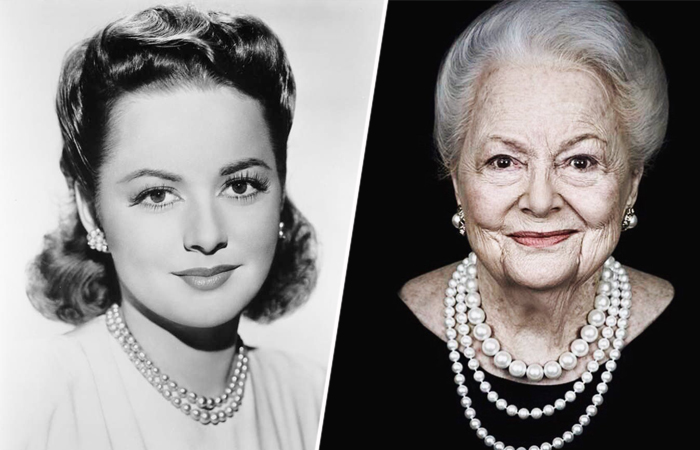
De Havilland was, by all accounts, a unique and extraordinary individual. Known for her unwavering commitment and hard work, she was deeply admired by her peers and fans alike. Time magazine highlighted her unparalleled dedication in a 1948 cover story, praising her for rarely stepping out of character, even off-set. The article was published during the release of The Snake Pit, a daring and powerful exposé about the realities of mental institutions in America. Her performance in the film was both shocking and revelatory, demonstrating her versatility and boldness as an actress.
Early Life and Introduction to Hollywood
Olivia de Havilland was born in Tokyo, Japan, in 1916, to British parents. Her early years were marked by upheaval when her father, Walter, a British patent attorney, abandoned the family for the housekeeper. In 1919, her mother, Lillian, moved Olivia and her younger sister, Joan Fontaine, to California to start anew. Both sisters would go on to have illustrious acting careers, with Joan also earning an Oscar for her role in Alfred Hitchcock’s 1941 thriller Suspicion. Despite their individual successes, the sisters’ relationship was often strained, marked by a famous sibling rivalry that lasted for decades.
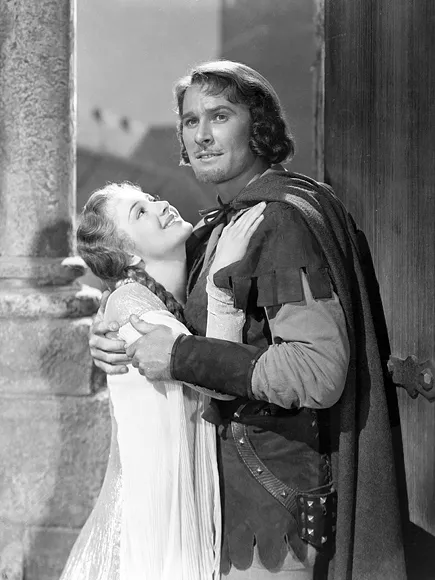
De Havilland’s acting journey began when she participated in a Hollywood Bowl production of Shakespeare’s A Midsummer Night’s Dream. Her portrayal of Hermia caught the attention of Warner Bros., leading to a contract in 1935. Shortly thereafter, she reprised her role in the studio’s film adaptation of the play, marking the start of an illustrious career. By 1936, she was paired with Warner Bros.’ resident swashbuckling hero, Errol Flynn. Together, they created one of the most iconic screen duos of the era, appearing in eight films, including Captain Blood, Dodge City, The Charge of the Light Brigade, and the Technicolor masterpiece The Adventures of Robin Hood (1938).
Her Relationship with Errol Flynn
De Havilland’s on-screen chemistry with Errol Flynn sparked endless speculation about their off-screen relationship. Despite Flynn’s reputation as a notorious ladies’ man and de Havilland’s own admission of having a crush on him, she consistently maintained that their relationship remained platonic. Both actors later confessed to having deep feelings for each other, but they denied ever becoming romantically involved.
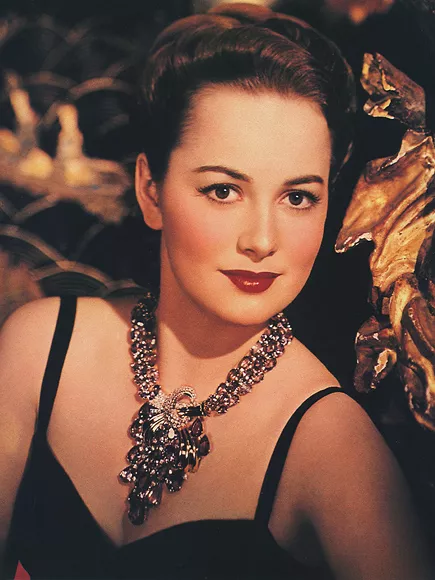
Reflecting on Flynn in 2016, de Havilland told PEOPLE that there were “no words to describe my feelings for Errol Flynn.” She praised him as an extraordinary individual who was “wonderful to talk to and listen to, most of the time fascinating company.” Despite his tumultuous personal life, Flynn’s charm and talent left a lasting impression on her.
A Defining Role in Gone With the Wind
While her partnership with Flynn solidified her status as a leading lady, it was her role as Melanie Hamilton in Gone With the Wind that cemented her legacy. Portraying the selfless and gentle cousin from Atlanta who wins the heart of Ashley Wilkes (played by Leslie Howard), de Havilland’s performance captivated audiences and inspired an entire generation of parents to name their daughters Melanie. The film, however, has faced criticism in recent years for its romanticized depiction of the antebellum South. HBO Max recently added a disclaimer to the film, providing historical context for its portrayal of the pre-Civil War era.
De Havilland’s nuanced performance as Melanie was a striking contrast to the fiery and manipulative Scarlett O’Hara, played by Vivien Leigh. While Scarlett schemed and fought her way through life, Melanie’s quiet strength and unwavering kindness won the hearts of audiences. De Havilland’s portrayal brought depth and humanity to a character that could have easily been overshadowed by Scarlett’s larger-than-life personality.
Off-Screen Battles and Legal Legacy
Off-screen, de Havilland was no less formidable. Far from the sweet and docile characters she often portrayed, she was fiercely determined and unafraid to challenge the status quo. Her most significant battle came in the form of a legal dispute with Warner Bros. over restrictive studio contracts. At the time, studios could effectively bind actors to seven-year contracts that included suspension periods, which extended the contract’s duration.
In a landmark legal case that came to be known as the “De Havilland Law,” she sued Warner Bros. and won. The California Court of Appeal’s decision in her favor effectively ended the studio contract system, granting actors greater freedom and control over their careers. This victory not only transformed Hollywood but also solidified de Havilland’s legacy as a trailblazer who fought for artists’ rights.
Later Career and Personal Life
After her legal triumph, de Havilland continued to deliver compelling performances. She won two Academy Awards for Best Actress: first for her role as a single mother in To Each His Own (1946) and then for her portrayal of a woman navigating family betrayal in The Heiress (1949). Her versatility and depth as an actress earned her widespread acclaim and cemented her place in Hollywood history.
In the 1950s, de Havilland relocated to Paris, seeking a quieter life away from the spotlight. Though her appearances in films and television became less frequent, she remained active in the industry, taking on occasional roles that showcased her enduring talent. In her later years, she focused on her personal life, cherishing her role as a mother to her two children, Benjamin and Gisèle.
Reflections on an Iconic Career
Throughout her life, de Havilland was deeply introspective about her career and the impact of her work. In interviews, she often spoke about the importance of storytelling and the responsibility of artists to convey truth and humanity through their performances. Her commitment to her craft and her willingness to take risks set her apart from her peers and left an indelible mark on the film industry.
In addition to her professional achievements, de Havilland’s grace and dignity made her a beloved figure among fans and colleagues alike. She navigated the challenges of fame with poise and resilience, earning the admiration of generations of moviegoers. Her influence extended beyond the screen, inspiring countless individuals to pursue their dreams and fight for their rights.
A Lasting Legacy
Olivia de Havilland’s passing marks the end of an era. As one of the last surviving icons of Hollywood’s Golden Age, her life and career symbolize a time when cinema was both an art form and a cultural force. Her contributions to film and her advocacy for artists’ rights continue to resonate, reminding us of the power of determination and integrity.
In a career spanning more than five decades, de Havilland’s work touched the hearts of millions. From her memorable performances in classic films to her courageous stand against studio oppression, she embodied the spirit of an artist who never compromised her principles. Her legacy lives on through her films, which remain timeless testaments to her talent and vision.
As we reflect on Olivia de Havilland’s extraordinary life, we are reminded of the enduring impact of her artistry and the strength of her character. Her journey serves as an inspiration to all who strive to make a difference, both on and off the stage. Though she is no longer with us, her spirit and contributions will forever be celebrated in the annals of Hollywood history.